Woodpecker damage is one of the most underestimated threats to your home’s exterior. Odyssey General Contracting has worked with countless homeowners who ignored early signs, only to face expensive structural repairs months later. These birds are relentless. Once they find a spot they like, they return again and again — drilling deeper each time. Understanding what this damage actually does to your home is the first step toward protecting it.
Why Woodpeckers Target Your Home
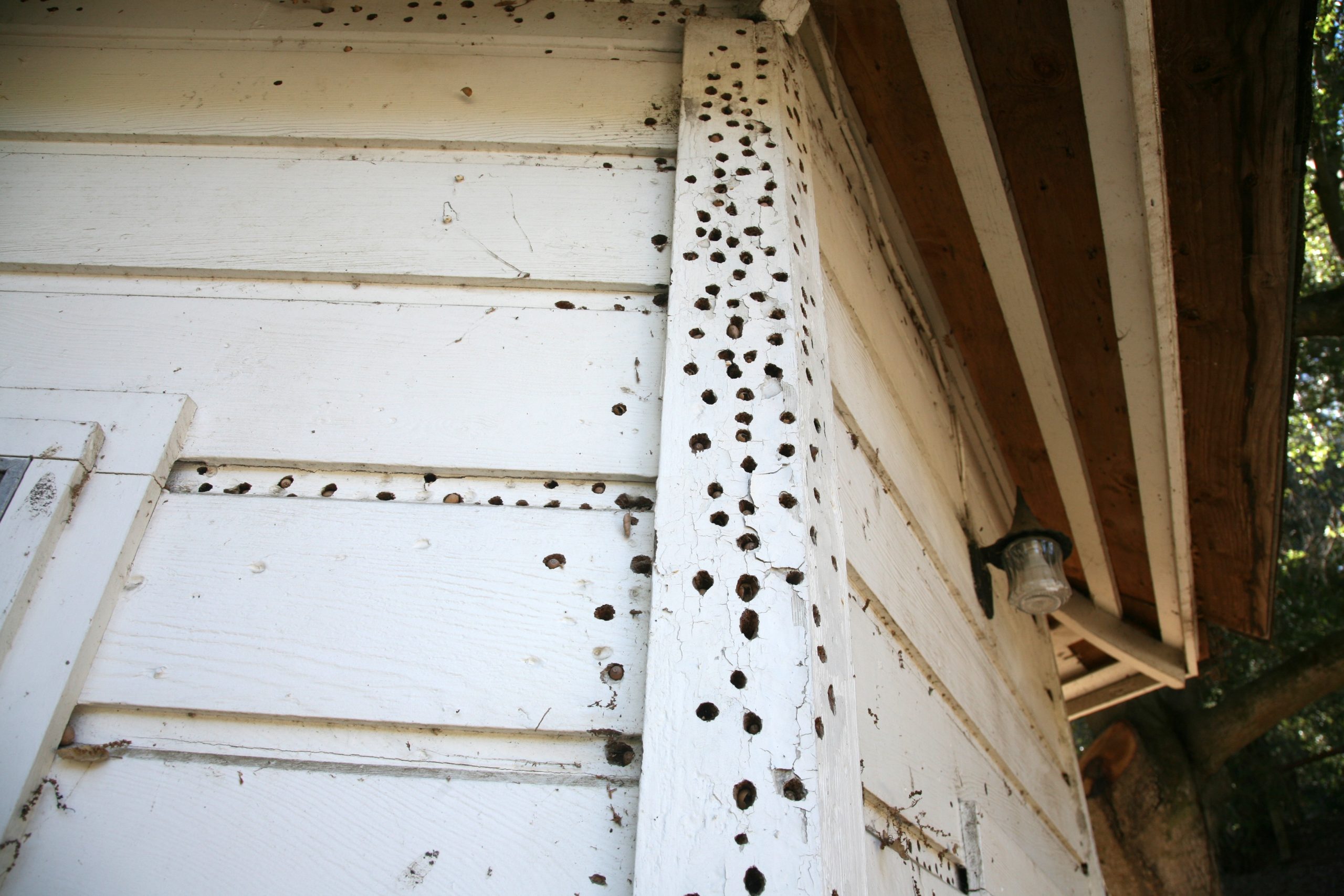
Woodpeckers don’t attack homes randomly. They drill for three reasons: finding insects living inside the wood, creating nesting cavities, or staking out territory through a behavior called “drumming.” Homes with wood siding, cedar shakes, or even stucco over foam are especially vulnerable. If insects have already made their way into your siding, woodpeckers can detect them through the surface — and they will excavate until they reach them.
The birds don’t distinguish between a dead tree and your fascia board. To them, your home is just another resource. Drumming behavior often targets hollow or resonant surfaces, which unfortunately includes metal flashing, gutters, and wooden trim.
The Layers of Damage You Don’t See
When a woodpecker drills a hole, the visible damage is only part of the problem. Each hole punches through the exterior finish and often penetrates the sheathing beneath. That sheathing — typically plywood or OSB — is your home’s first line of structural defense against moisture.
Once that layer breaks, water enters. Rain, snowmelt, and morning condensation push through the gap every single day. The wood begins to rot from the inside. Mold spores find a warm, damp environment and spread through the wall cavity. Insulation becomes saturated and loses its effectiveness. All of this happens invisibly, behind your siding, while the outside of your home looks mostly fine.
By the time most homeowners notice soft spots, discoloration, or bubbling paint, the damage has already spread well beyond the original hole. Prompt woodpecker hole repair is not cosmetic — it’s structural.
How Woodpecker Damage Affects Energy Efficiency
Gaps in your exterior don’t just let water in. They also allow conditioned air to escape. A handful of small holes along your soffits or behind your trim can quietly raise your heating and cooling bills throughout the year. Cold Calgary winters make this especially costly.
Compromised insulation compounds the problem. Once moisture saturates your wall insulation, it stops performing. You end up paying to heat or cool air that immediately escapes through damaged wall assemblies. Homeowners often blame old windows or poor HVAC performance without realizing the real culprit is sitting behind their siding.
Addressing this as part of a broader exterior services plan helps restore both the weatherproofing and the thermal envelope of your home at the same time.
Structural Risks That Escalate Fast
Woodpecker damage rarely stays contained. A single active bird can create dozens of holes across a single season. Nesting cavities are particularly destructive — the birds excavate large, deep pockets that can span several inches into the wall assembly. These openings invite secondary damage from squirrels, wasps, and other wildlife looking for shelter.
Rot spreads laterally through framing members. Once a rim joist, wall stud, or rafter tail absorbs enough moisture, it begins to lose structural integrity. In severe cases, this affects the ability of the wall to carry load properly. What started as a few small holes becomes a framing repair.
Specialized repair services address these situations systematically — removing compromised materials, treating for mold, and restoring structural continuity before the damage spreads further.
What a Proper Repair Actually Involves
Patching the hole with caulk is not a repair. It seals the surface while leaving rotted wood, moisture, and mold untouched underneath. A proper repair involves removing the damaged siding and sheathing, inspecting the framing behind it, treating any mold present, replacing insulation if needed, and installing new materials that match the existing exterior.
Color matching, texture blending, and proper flashing installation all matter. A repair that looks patchy or allows water infiltration around its edges defeats the purpose entirely. Odyssey General Contracting approaches these repairs the same way a new build would be assembled — with attention to every layer, not just the surface.
Prevention After Repair
Once your home is repaired, keeping woodpeckers away requires a combination of deterrents. Visual deterrents like reflective tape, predator decoys, and flash tape disrupt their comfort. Physical barriers such as hardware cloth or bird netting installed over vulnerable sections deny access entirely.
Treating underlying insect infestations removes the primary food source that drew the birds in the first place. If carpenter bees, beetles, or wood-boring insects are active in your siding, woodpeckers will continue returning regardless of what deterrents you install.
Ongoing property maintenance gives you the best long-term defense — regular inspections catch new activity before it turns into another repair.
Closing
Woodpecker damage is deceptively serious. The hole you see on the outside represents a chain of consequences happening inside your wall — rot, moisture infiltration, lost insulation value, and potential framing compromise. Catching it early and repairing it correctly saves thousands of dollars and protects the long-term health of your home.
Odyssey General Contracting provides thorough, professional repairs that address every layer of the damage — not just what’s visible. Visit odysseygeneralcontracting.ca to learn more about how we protect homes from the outside in.
Frequently Asked Questions
1. How do I know if my home has woodpecker damage? Look for round or oval holes in your siding, fascia, or trim — usually between one and three inches wide. You may also notice wood chips or sawdust near the base of your walls. Drumming sounds coming from your exterior in the early morning are another strong indicator.
2. Can I just fill woodpecker holes with caulk? Caulk seals the surface but doesn’t address damage underneath. If the wood behind the hole is rotted or wet, sealing over it traps moisture and accelerates decay. A proper repair removes and replaces the compromised material before closing the surface.
3. Why does woodpecker damage get worse over time? Once a hole exists, water enters with every rain event. That moisture rots the wood, attracts more insects, and gives birds even more reason to return. The damage compounds layer by layer until it reaches structural framing.
4. Are certain siding types more vulnerable than others? Yes. Cedar, redwood, and pine siding are most attractive to woodpeckers because they’re softer and more likely to harbor insects. Stucco over foam is also targeted. Fiber cement and vinyl siding offer better resistance, though no siding is entirely immune.
5. How soon should I repair woodpecker holes? As soon as possible. Every week of delay allows more moisture to enter and spread. Calgary’s freeze-thaw cycles make this worse — water that enters in fall freezes and expands inside the wall cavity over winter, widening cracks and accelerating rot.
Concerned about woodpecker damage? Contact Odyssey General Contracting for expert repairs. Learn more about our woodpecker hole repair in Calgary — call (587) 228-9224 for a free quote.